This Valentines Day, while staying at home to protect the ones you love, learn more about how to love and build a city and streets that support bicycles as transport.
Blog
-

2020 Festive Gift Ideas
Throughout the challenges of the 2020 pandemic, bicycles have remained an essential means of transport. With the year coming to a close, we must now consider how to responsibly celebrate this festive season.
Looking for gift-giving events throughout the month of December? Check out these curated gift shopping ideas from The Bikeport, which can be gift wrapped and mailed safely to your loved ones.
As an Amazon Associate, The Bikeport by Kevin Montgomery earns from qualifying purchases.
-
Fall 2020 Is Here.
Night Comes Earlier.
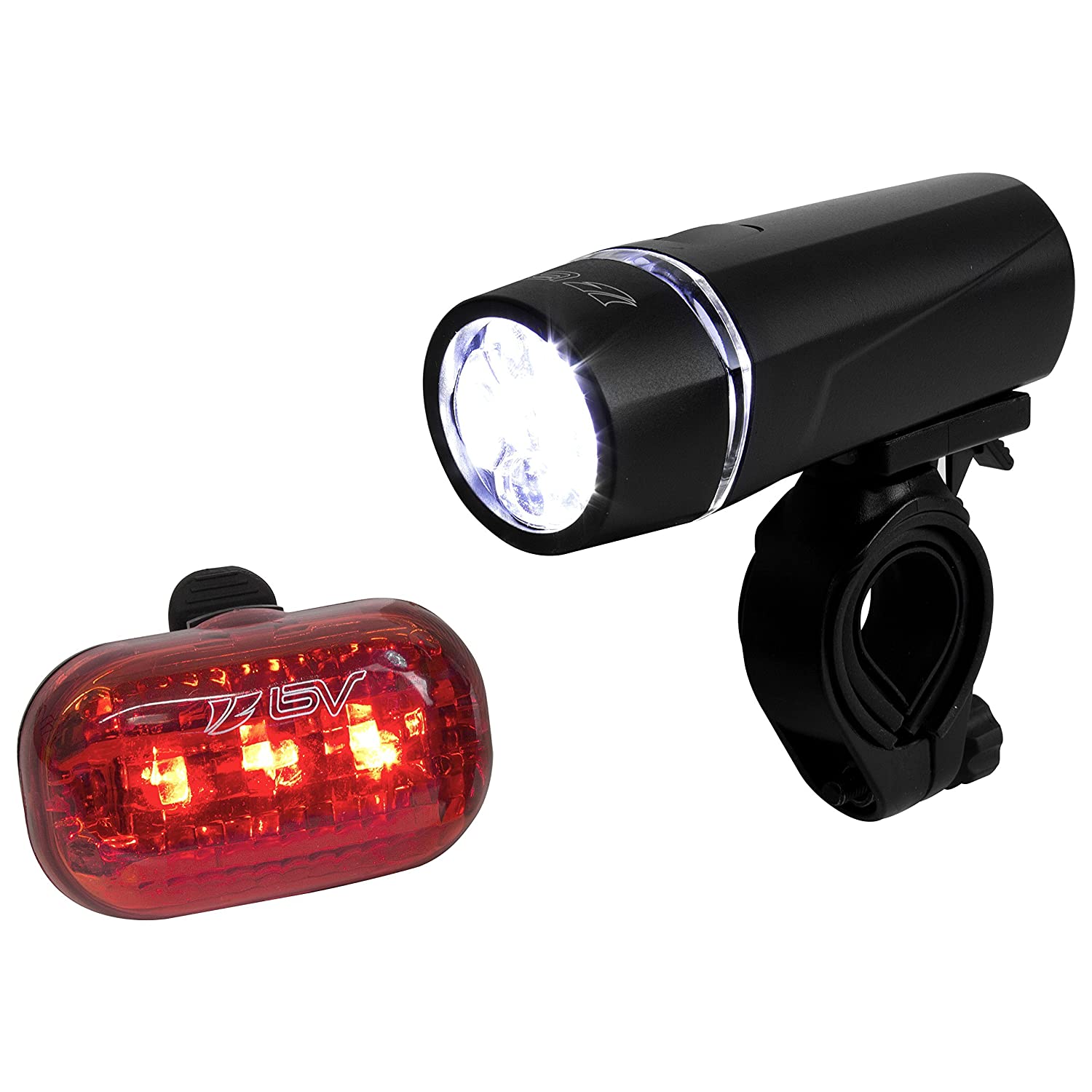
Make Sure You Have Lights!As sunset arrives earlier in the evening at this time of year, it’s important to make sure you have working lights on your bicycle. If you don’t have lights or are thinking of an upgrade, check out the Standard Equipment from The Bikeport.
-
Bicycles As Transport: Intersections
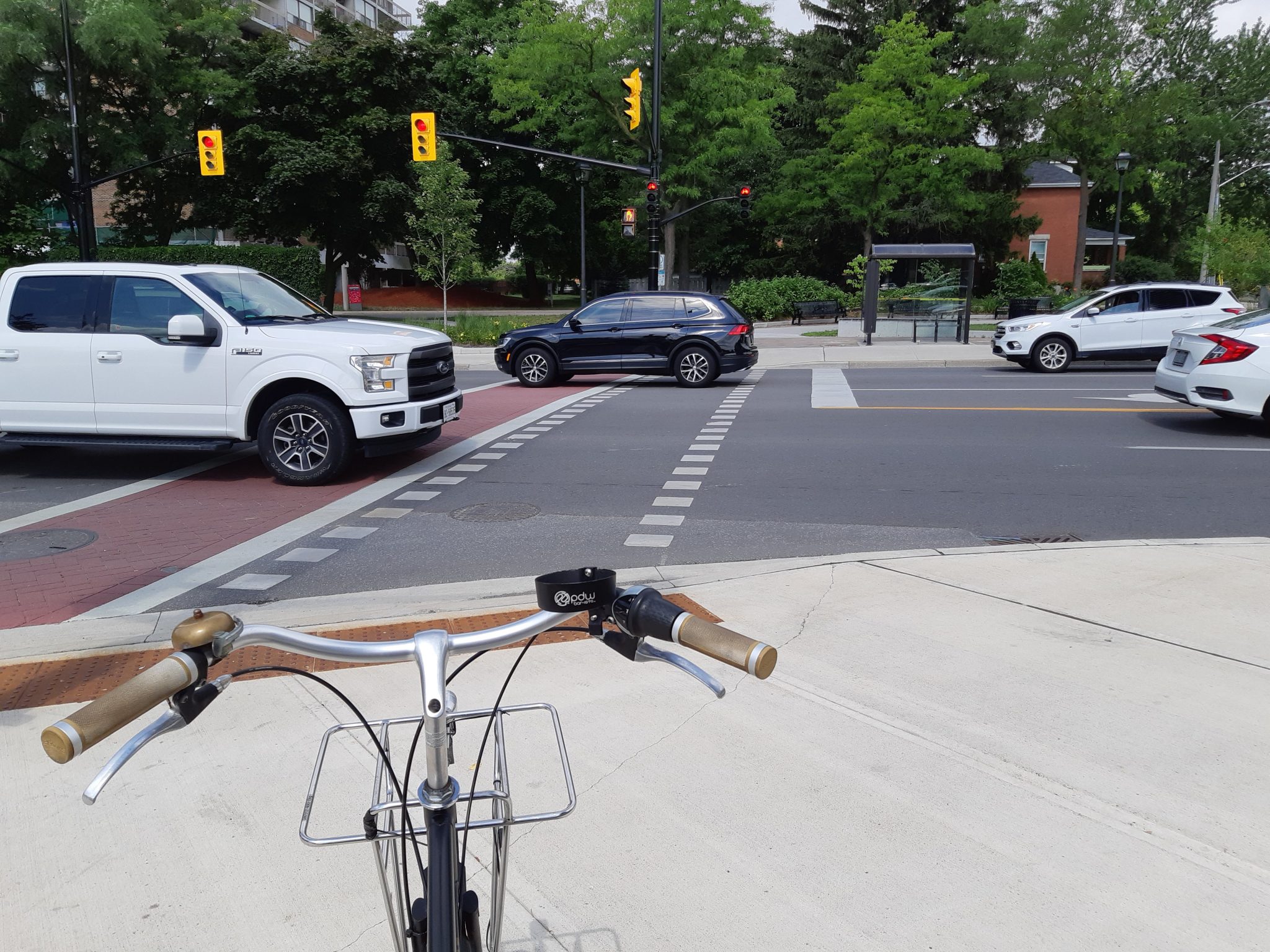
We don’t often consider just how overwhelming intersections can be. All kinds of people, using different methods to get around — walking, cycling, and driving — taking turns to traverse space.
For this to work, it’s important to understand this key point: Yielding the right-of-way.
Right Of Way
“Right of way” refers to the legal right of a road user to proceed with precedence over others in a particular situation or place. Put simply, it means “who’s turn is it”.
It’s been written that “right of way is given, not taken“. For this practice to work, those who do not have precedence must yield, or give way. Importantly, if someone erroneously proceeds into an intersection ahead of you, you are expected to yield to avoid a collision.
Options For Traversing An Intersection With A Bicycle
Note: Much of this information is available on The Official Ministry of Transportation (MTO) Driver’s Handbook.
Dismount and Walk (Crosswalk)
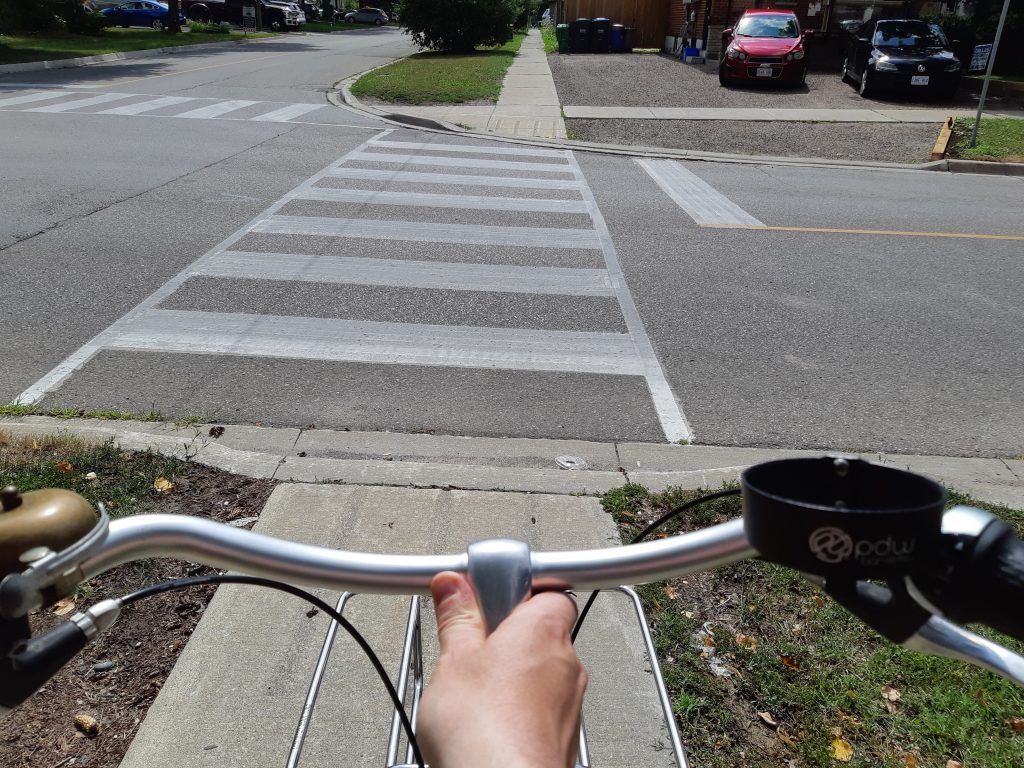
You might decide that an intersection is too busy, or that you are otherwise uncomfortable using your bicycle, and would feel more comfortable walking through the intersection. In this case, follow advice for pedestrian traffic.
- Cross at marked crosswalks or crossovers.
- Preferably, confirm that drivers can see you before you cross. Try to make eye contact before you step into the road.
At A Pedestrian Traffic Signal

- Cross at the start of the “Walk” signal.
- Do not start to cross if you see a flashing “Do Not Walk” signal. If you already started to cross, you can complete your crossing. Otherwise, you are now expected to give way.
- Watch for turning traffic.
- Do not cross on a solid “Do Not Walk” signal. This signal means that you are now expected to give way.
Use Bicycle Facilities (Crossrides)
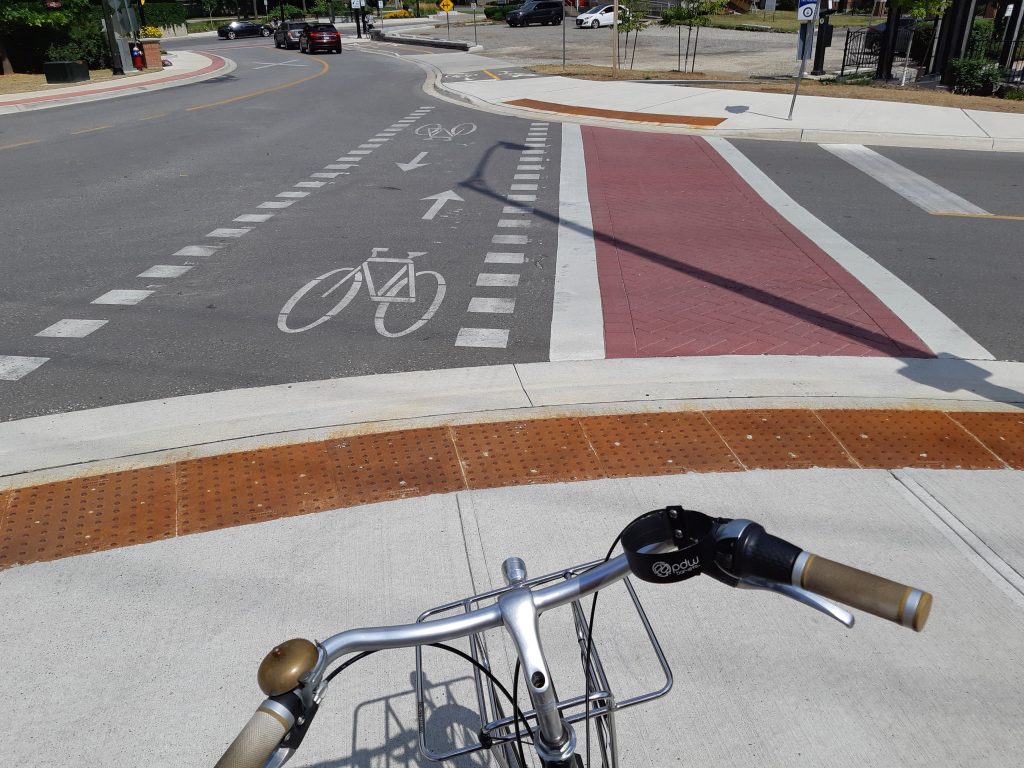
Some intersections will have space specifically for bicycle use. These spaces are called “crossrides”, as opposed to crosswalks which are meant for on-foot pedestrian traffic only.
There are different kinds of crossrides. Each work a little bit differently in how they separate bicycle and pedestrian traffic.
- Watch for pedestrians.
- Cross at marked crossrides.
- Preferably, confirm that drivers can see you before you cross. Try to make eye contact before you ride into the road.
At A Bicycle Traffic Light
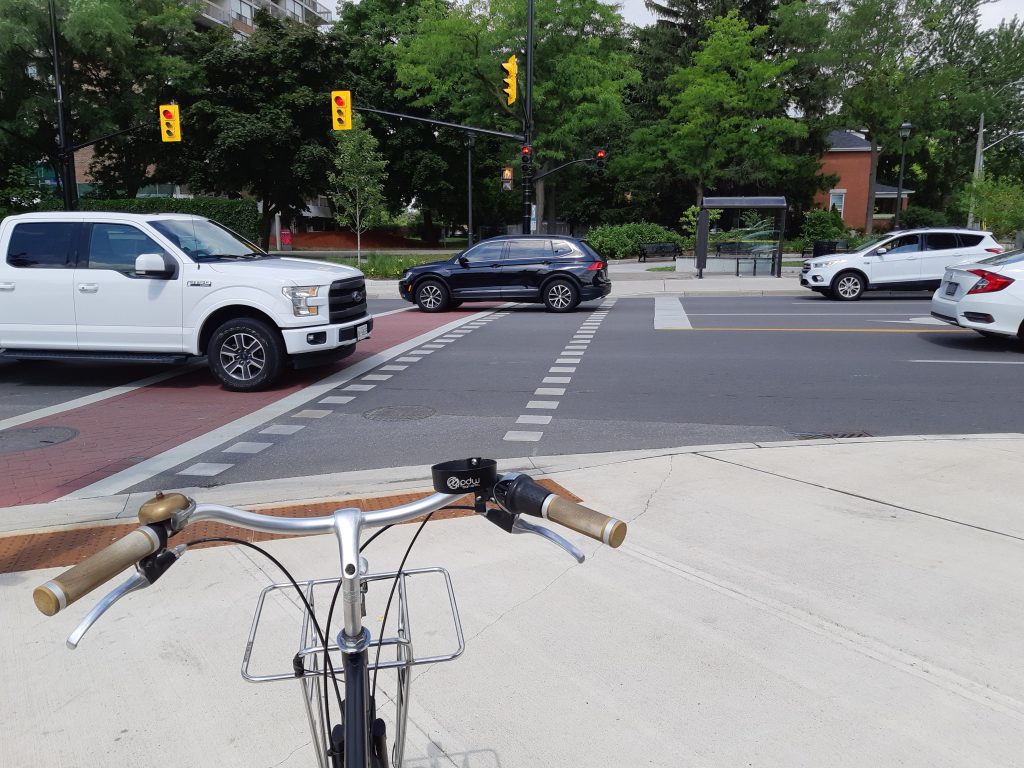
- Cross at the start of the green light.
- Do not start to cross if the light turns yellow. If you already started to cross, you can complete your crossing.
- Watch for turning traffic.
- Do not cross on a red light. This signal means that you are now expected to give way to others.
Use General Traffic Facilities (The Road)
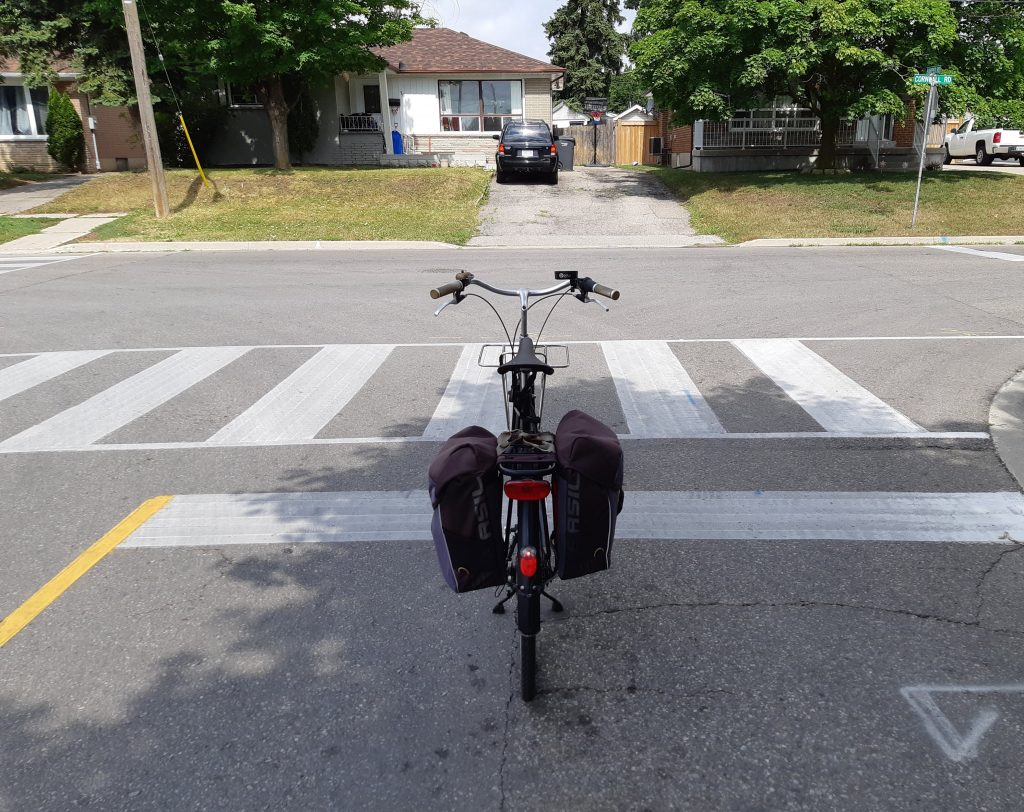
Finally, some people might feel perfectly comfortable using their bicycle in the same general road space and facilities as people using automobiles. In this case, the same expectations for motorists also apply for cyclists.
- Watch for pedestrians.
- You must yield the right-of-way to a vehicle approaching the intersection before you.
- If two vehicles come to an uncontrolled intersection from different roads at the same time, the vehicle on the left must yield to the vehicle on the right.
- At an intersection with stop signs at all corners, you must yield the right-of-way to the first vehicle to come to a complete stop.
- At any intersection where you want to turn left or right, you must yield the right-of-way. If you are turning left, you must wait for approaching traffic to pass or turn and for pedestrians in or approaching your path to cross.
At A Traffic Light
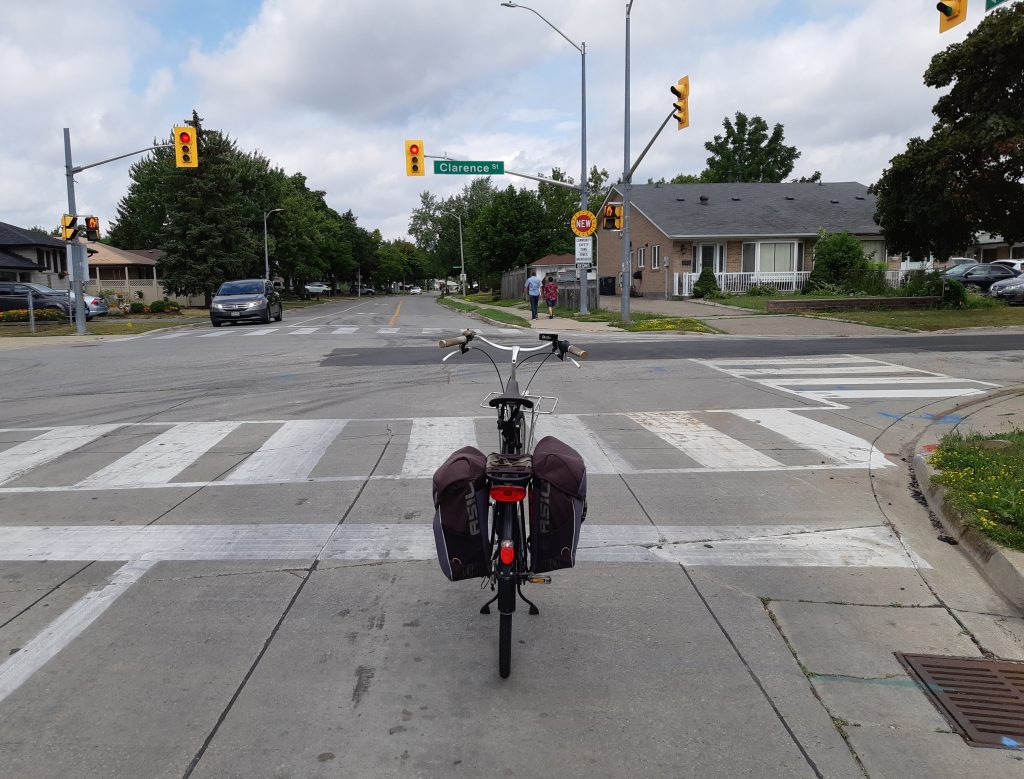
- Cross at the start of the green light.
- If the light has been green for a while, be prepared to stop when it turns yellow.
- Do not start to cross if the light turns yellow. If you already started to cross, you can complete your crossing.
- Watch for turning traffic.
- Do not cross on a red light. This signal means that you are now expected to give way to others.
Disclaimer: “Bicycle As Transport” videos and articles are for demonstration purposes to provide general information on lawfully using a bicycle. They are not CAN-BIKE instructions, are not comprehensive, nor provides specific advice or any guarantees. You must determine for yourself what your experience, training and competency level is with using a bicycle. The Bikeport by Kevin Montgomery disclaims any liability in connection with the use of this information.
To arrange a CAN-BIKE course, please visit:
http://bikeport.ca/courses/available-courses/ -
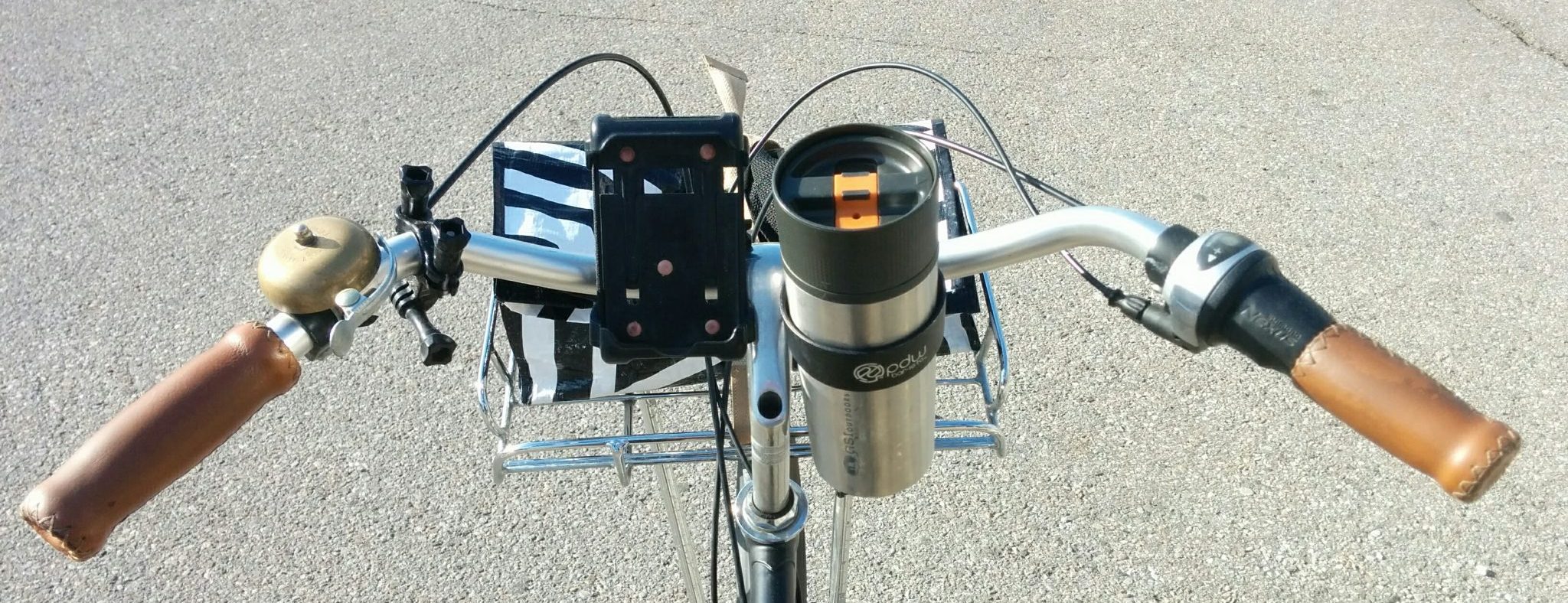
World Bicycle Day, 2020
As we recognize World Bicycle Day in 2020, during the COVID-19 pandemic, many of us are not working or are working from home. Either way, we might not be getting as much activity into our daily lives as we ought to. Using a bicycle to complete your essential trips is one way to help address this.
Regular physical activity of moderate intensity – such as walking, cycling, or doing sports – has significant benefits for health. At all ages, the benefits of being physically active outweigh potential harm, for example through accidents. Some physical activity is better than none. By becoming more active throughout the day in relatively simple ways, people can quite easily achieve the recommended activity levels.
-
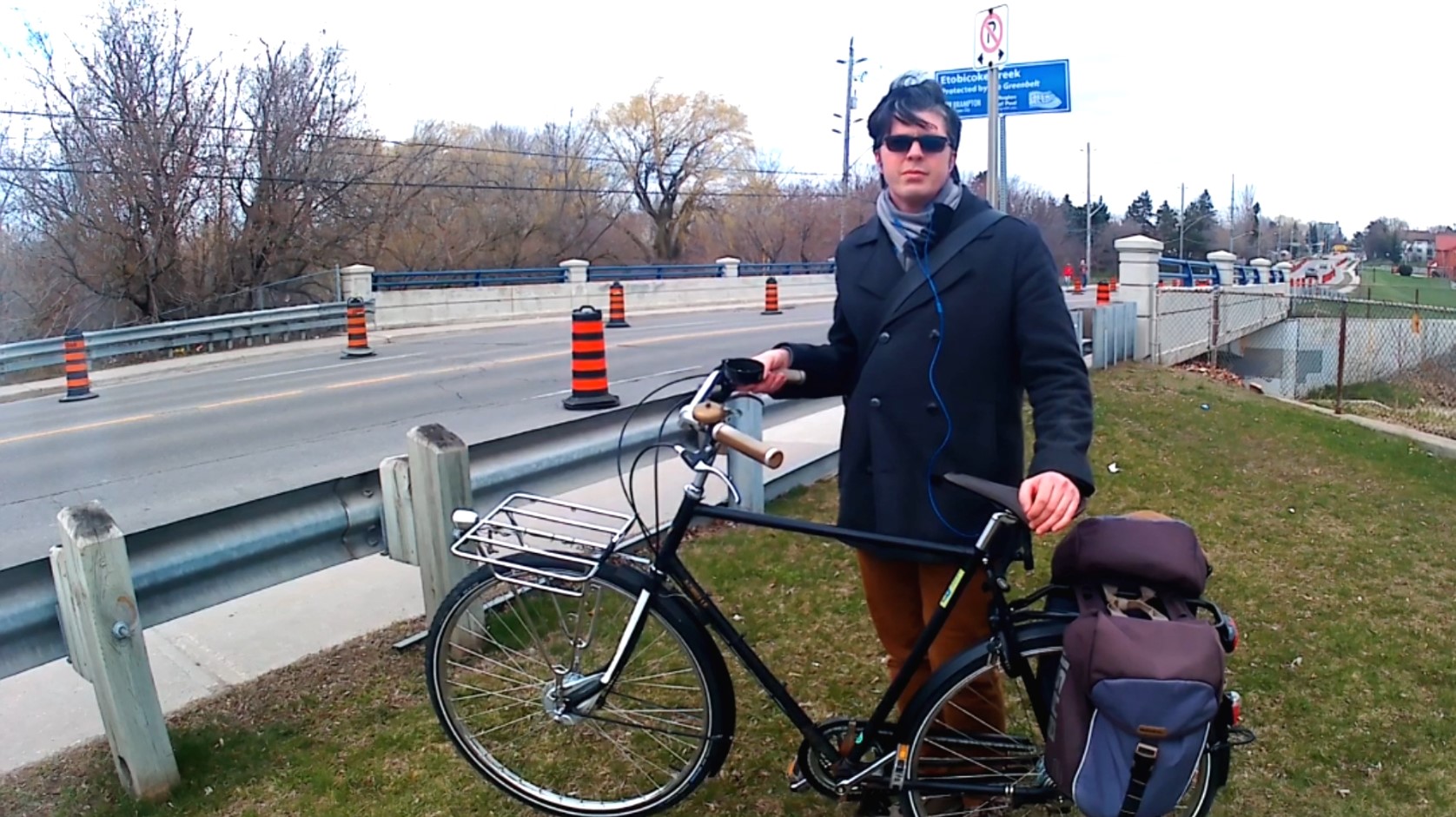
Bicycles As Transport: Vodden Street Bike Lanes
This episode of Bicycles As Transport discusses the new Vodden Street Bike Lanes.
The COVID-19 pandemic has changed everything about how we do things on a day-to-day basis. This is particularly true with transportation, with the need for more physical distancing.
The City of Brampton is one of many cities around the world that are looking at ways of using space differently. Throughout the Region of Peel, there’s been a 33% reduction in automobile traffic. At one point, Toronto reported a 73% reduction. Many people have found themselves without work, or working from home, as a result of this pandemic.
What about the people who do need to go to work? Our essential service workers? The City of Brampton has continued to run Brampton Transit with transit vehicles running at half capacity. This has created new pressures to make sure there is enough service on busier routes.
There are more people using pathways and recreation trails. While pedestrian traffic are able to gap themselves accordingly for physical distancing, there isn’t a lot of space remaining to operate a bicycle safely in between people.
Vodden Street provides a critical east-west cycling corridor across the City of Brampton. Vodden Street connects to many important amenities (see 360 video below for examples). Brampton also has a challenge with crossing the heavily used Highway 410. Vodden Street is one of the few roads that crosses over the 410 without conflict with automobile traffic trying to access the highway.
Essential Locations, Accessible From Vodden Street
- Pharmacies
- Grocery Stores
- Hardware Store
- Computer Repair
- Food Takeaway Locations
Vodden Street also has the benefit of connecting to several trail systems, including the Etobicoke Creek Trail, Esker Lake Trail, and Chinguacousy Trail.
Remember to subscribe for future episodes!
Disclaimer: “Bicycle As Transport” videos are for demonstration purposes to provide general information on lawfully using a bicycle. They are not CAN-BIKE instruction videos, are not comprehensive, nor provides specific advice or any guarantees. You must determine for yourself what your experience, training and competency level is with using a bicycle. The Bikeport by Kevin Montgomery disclaims any liability in connection with the use of this information.
To arrange a CAN-BIKE course, please visit:
http://bikeport.ca/courses/available-courses/ -
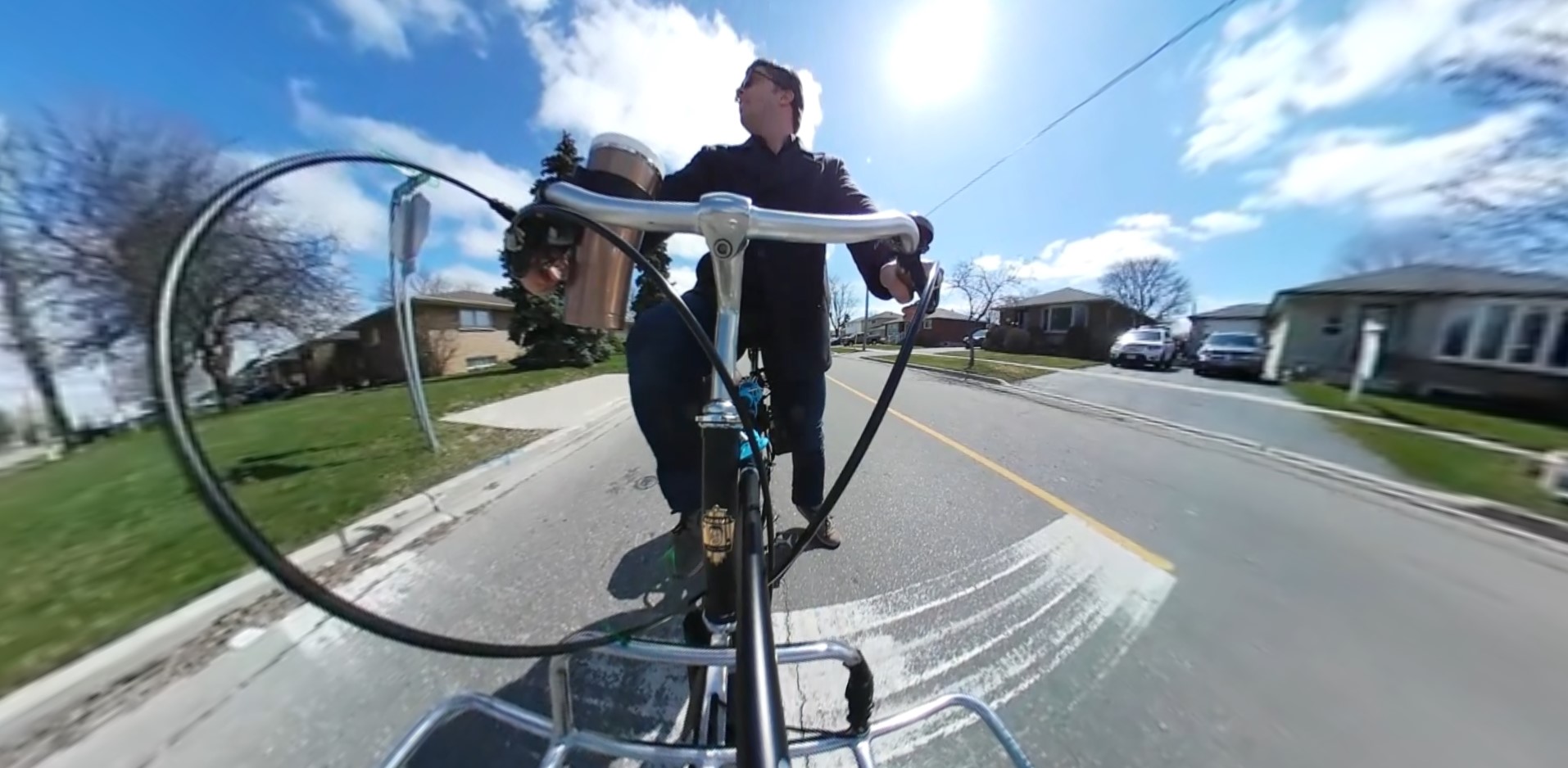
Bicycles As Transport: Local Roads
This episode of Bicycles As Transport discusses local roads.
In the absence of nearby bike lanes or recreation trails, local roads to connect you to these facilities will likely be the route you’ll need to take.
General Expectations
Follow all traffic laws.

Kevin Montgomery, stopping at a stop sign. Keep Right.

Ride about a meter from the curb.
Sewer grates are useful for measuring the distance from curbs.Bicycles, as slower-moving traffic, need to keep to the right of the road to allow faster moving vehicles to overtake. Keep about a meter from the curb, or from parked cars.
Take Space If Necessary.

“Taking the lane”
Moving away from the curb to overtake a parked car obstructing the path ahead.There is room for discretion. People can lawfully use bicycles in any part of the lane. If a person on a bicycle feels that the path they are traveling on is unsafe for any reason, such as potholes, obstructions, or because of a change in direction ahead such as preparing to make a left turn, they are allowed to adjust their position to the left.
Remember, when changing position: Shoulder-check, signal your intent, shoulder-check to make sure the way is clear before changing your position. For more information, please refer to Bike Handling Skills.
A non-exhaustive compilation of online references and things to know about using a bicycle on local roads is available on The Bikeport website. Particularly Traffic Skills.
For additional information, please check out the Ministry of Transportation for The Government of Ontario (MTO) website.
Bicycles Do Not Require
- Registration
- Licence plates
- Vehicle insurance
- Driver’s licence
People of all ages can ride a bike!
Remember to subscribe for future episodes!
Disclaimer: “Bicycle As Transport” videos are for demonstration purposes to provide general information on lawfully using a bicycle. They are not CAN-BIKE instruction videos, are not comprehensive, nor provides specific advice or any guarantees. You must determine for yourself what your experience, training and competency level is with using a bicycle. The Bikeport by Kevin Montgomery disclaims any liability in connection with the use of this information.
To arrange a CAN-BIKE course, please visit:
http://bikeport.ca/courses/available-courses/ -

Bicycle Repair Is An Essential Service
On March 23, 2020, in an effort to further reduce the spread of COVID-19, the government of Ontario issued an order to close at-risk businesses. Workplaces deemed to be essential will continue to operate, including ” …vehicle-repair, including bicycle repair“.
velofix continues to be available to repair your bicycle.
-
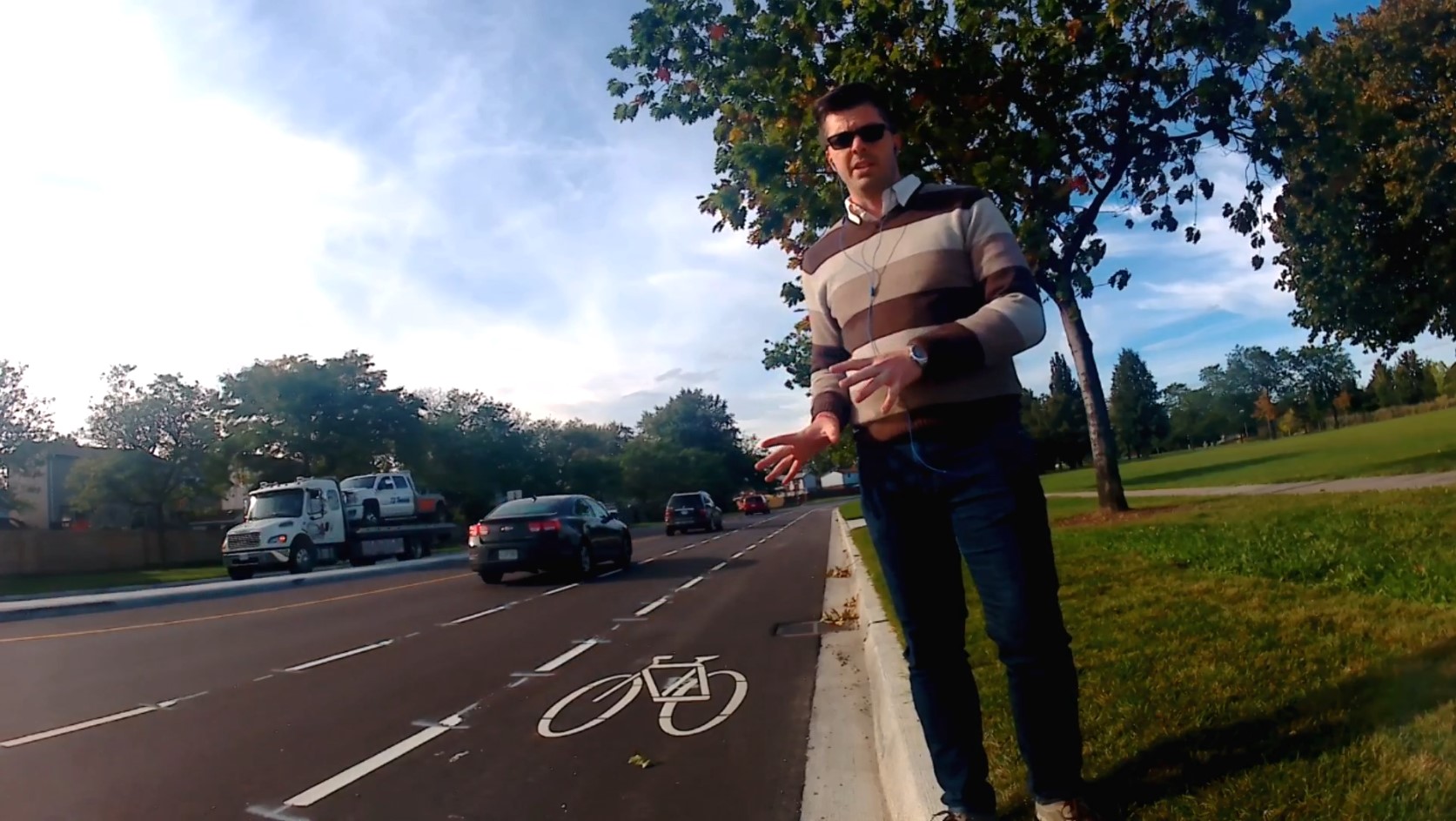
Bicycles As Transport: Painted Shoulders and Bike Lanes
This episode of Bicycles As Transport discusses Painted Shoulders and Bike Lanes.
Urban shoulders serve several purposes. Apart from serving as a space that people can use their bicycles in, they also serve as spaces for people to park their cars. There are usually no markings or signs to indicate that it’s a cycling-specific facility, and to avoid confusion. The constraint on these spaces is that they can only serve one purpose at a time: Either as a space to use a bicycle, or a space to park a car. When use a bicycle in such a facility, you’ll need to be prepared to exit the shoulder if necessary to overtake parked cars that are using the space.
Bike lanes, on the other hand, are different. They will be clearly marked and/or signed as a bicycle-only facility. They are not lawful places to park cars.
Remember to subscribe for future episodes!
Disclaimer: “Bicycle As Transport” videos are for demonstration purposes to provide general information on lawfully using a bicycle. They are not CAN-BIKE instruction videos, are not comprehensive, nor provides specific advice or any guarantees. You must determine for yourself what your experience, training and competency level is with using a bicycle. The Bikeport by Kevin Montgomery disclaims any liability in connection with the use of this information.
To arrange a CAN-BIKE course, please visit:
http://bikeport.ca/courses/available-courses/ -
COVID-19 & Tune-ups
Does your bicycle need a tune-up, but you’re concerned about social distancing to prevent the spread of COVID-19?
velofix has assured The Bikeport that “they can work with that“.
We take the health and safety of our customers and ourselves very seriously.
If you are looking to book a service and have concerns regarding the spread of the Coronavirus, please note that we can handle most jobs without physical interaction or contact.
We are also practising social distancing by foregoing handshakes and inviting riders into the Mobile Bike Shops.
If you prefer to avoid contact, please make a note in your booking and leave your bike(s) in an area we can access. We can invoice you via email once the service is completed.